More


What are Quantum Dots?
Quantum dots are nanoscale semiconductors that absorb and re-emit tunable light.

Quantum dots (QDs) are vanishingly small particles of semiconductor material, so small that one quantum dot compared to a golf ball is roughly the same ratio as a golf ball compared to planet Earth. Despite their size, quantum dots are extraordinarily effective at manipulating color and light, making them one of the most versatile nanomaterials in modern science.
Each quantum dot absorbs photons and re-emits them as a precise, pure color of light, a process called photoluminescence. The emitted color is determined by the dot’s size: smaller dots emit higher-energy blue light, while larger dots emit lower-energy red light. This size-dependent tunability gives quantum dots an almost unique ability to be engineered for specific wavelengths, enabling precise control over how light behaves in any application they are integrated into.
This tunability makes quantum dots ideal for a wide range of applications, from optimizing the light spectrum inside a commercial greenhouse to improving the energy conversion efficiency of solar panels to enabling electricity-generating windows that look like ordinary glass.

Quantum dot size determines emission color: larger nanoparticles emit red, smaller nanoparticles emit blue
How Quantum Dots Work
Quantum dots operate through a straightforward but powerful physical principle. When a quantum dot absorbs a photon of light, it temporarily excites an electron to a higher energy state. When that electron returns to its resting state, it releases a photon, but at a lower, more controlled energy level. The wavelength of that released photon is determined almost entirely by the size of the quantum dot.
This gives manufacturers an extraordinary level of control. By precisely tuning the size and composition of quantum dots during synthesis, it is possible to engineer materials that absorb one type of light and emit another, converting UV or blue light into red or infrared light, for example, with near-perfect efficiency.

Absorb light
A quantum dot absorbs a photon of light.
Excite electron
The photon temporarily excites an electron to a higher energy state.
Re-emit a photon
When the electron returns to its resting state, it releases a photon at a lower, more controlled energy level.
Size sets wavelength
The wavelength of that released photon is determined almost entirely by the size of the quantum dot.
Key Properties of Quantum Dots
High luminescence efficiency
UbiQD’s quantum dots emit nearly 100% of absorbed light as photoluminescence.
Size-tunable emission
Color output is precisely controlled by adjusting dot size during manufacturing.
Thermal and chemical stability
Engineered to remain stable in demanding real-world environments.
Cadmium-free composition
Built on CuInS₂/ZnS chemistry using common, earth-abundant copper, indium, zinc, and sulfur.
Scalable manufacturing
UbiQD’s patented process enables cost-effective production at industrial volumes.
Why Do People Use Quantum Dots?
Quantum dots have moved from laboratory curiosity to commercial material because they solve problems that conventional materials cannot. Their ability to be precisely tuned to emit specific wavelengths of light, by simply controlling their physical size during synthesis, gives engineers and manufacturers a level of control over light that was previously impossible or prohibitively expensive.
The result is a class of materials that consistently outperforms alternatives across a surprisingly wide range of industries: more accurate color in displays, more efficient light conversion in solar panels, more targeted fluorescence in medical imaging, and more effective light spectrum optimization in agriculture. In each case the underlying mechanism is the same, quantum confinement, but the application is entirely different.
There are also regulatory and sustainability reasons to adopt quantum dot technology. As global chemical safety standards continue to tighten across electronics, agriculture, and consumer products, demand for cadmium-free and heavy-metal-free quantum dots is accelerating. Companies integrating cadmium-free formulations now are building a compliance and performance advantage that will compound over time.

What Makes UbiQD’s Quantum Dots Different
Not all quantum dots are built the same way. The performance, safety profile, and commercial viability of quantum dots vary significantly depending on their composition and how they are manufactured. UbiQD’s approach differs from conventional QD producers in three fundamental ways.
Safe by Design
UbiQD’s quantum dots are heavy-metal-free. They are based on copper-indium sulfide (CuInS₂) cores with zinc sulfide (ZnS) shells, materials derived from common, earth-abundant elements. This core-shell structure delivers near-perfect luminescence efficiency without cadmium or lead, making UbiQD’s dots compliant with increasingly strict global chemical safety regulations and suitable for agricultural and consumer-facing applications.
Built on Nobel Prize-Winning Science
UbiQD licenses intellectual property from Los Alamos National Laboratory and MIT, including patents co-authored by 2023 Nobel Prize in Chemistry laureate Moungi Bawendi. The foundational science behind UbiQD’s quantum dots is the same science that earned the Nobel Prize, and UbiQD is the company commercializing it at industrial scale.
Scalable for Industrial Applications
UbiQD’s patented manufacturing process uses thermodynamic precision rather than complex chemical engineering to produce quantum dots at consistent quality and scale. This makes UbiQD’s materials cost-effective for B2B partners looking to integrate quantum dot technology into existing products, as a drop-in solution rather than a custom research project.
Quantum Dot Applications Across Industries
Quantum dots are one of the few nanomaterials with proven applications across many unrelated industries. The same physics of size-tunable photoluminescence and quantum confinement makes them useful in a television display, a greenhouse, a hospital imaging suite, and a solar panel, even though the engineering differs completely in each case. The table below maps the full landscape of quantum-dot applications by industry.

Display Technology
Quantum dots produce precise, pure color in QLED TVs, monitors, and phones through quantum dot enhancement films (QDEF), with better color accuracy and energy efficiency than conventional LCD. Display is the largest commercial QD market at roughly 66% of global QD revenue.

LED Lighting
Quantum dots convert LED output into precise color wavelengths, producing tunable, high-efficiency white light. They outperform conventional phosphors on color rendering and energy efficiency.

Agriculture
Luminescent quantum-dot films placed inside or over greenhouses convert UV and blue light into the red wavelengths plants use most efficiently for photosynthesis. This raises yield without changing existing infrastructure.

Solar Energy
Quantum dots improve photovoltaic efficiency by absorbing wavelengths that silicon cells underperform on and re-emitting them where the cell converts better. They also enable building-integrated solar windows that generate electricity while staying transparent.
Biomedical Imaging
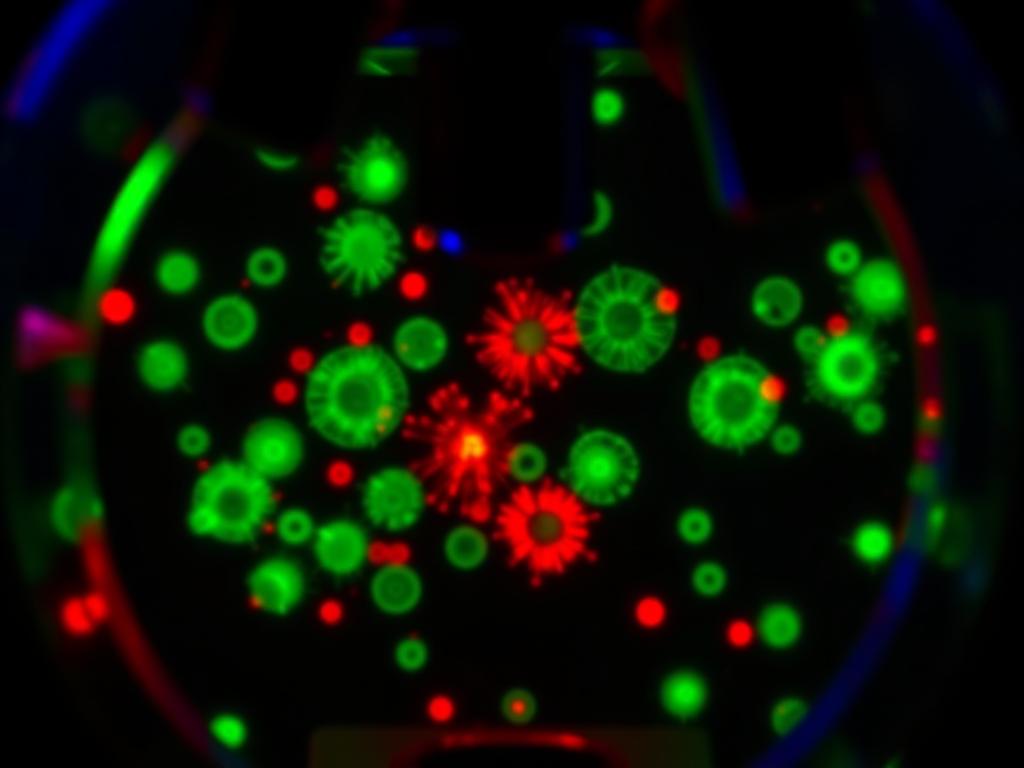
Quantum dots serve as fluorescent probes for cell imaging, tumor detection, and image-guided surgery, valued for high photostability, narrow emission bands, and tunable near-infrared emission for deep-tissue imaging.

Drug Delivery & Biosensors
Quantum dots are being explored as targeted drug-delivery vehicles and ultrasensitive biosensors for healthcare diagnostics and environmental monitoring, drawing on their tunable surface chemistry and high specificity.

Security & Authentication
Luminescent quantum-dot markers create unclonable authentication features in security inks, supporting brand protection and anti-counterfeiting that conventional materials cannot replicate.
Lasers & Fiber-Optic Communications
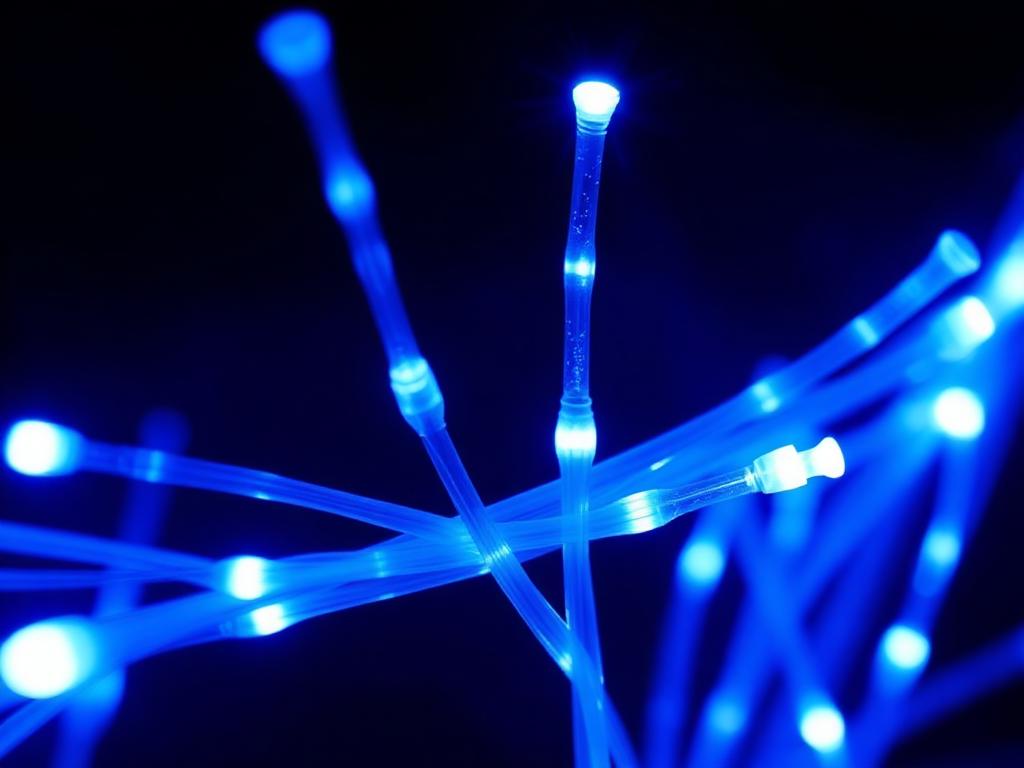
Quantum-dot lasers offer narrow emission linewidth, high color purity, and temperature stability, which suits them to high-speed fiber-optic communication and precision industrial manufacturing.

Sensors & Photodetectors
Quantum-dot photodetectors and sensors offer ultrahigh sensitivity across visible and infrared wavelengths, with uses in medical diagnostics, environmental monitoring, night vision, and industrial inspection.

Quantum Computing
Certain quantum-dot architectures are being explored as qubits for quantum computing and communication. This remains an area of fundamental research rather than commercial deployment.

Cosmetics & Personal Care
Quantum dots act as UV filters in sunscreens, and carbon dots have shown antioxidant, anti-aging activity in lab studies. Fluorescent dots have reached the consumer market in nail products that glow under UV or sunlight.
Apparel & Textiles
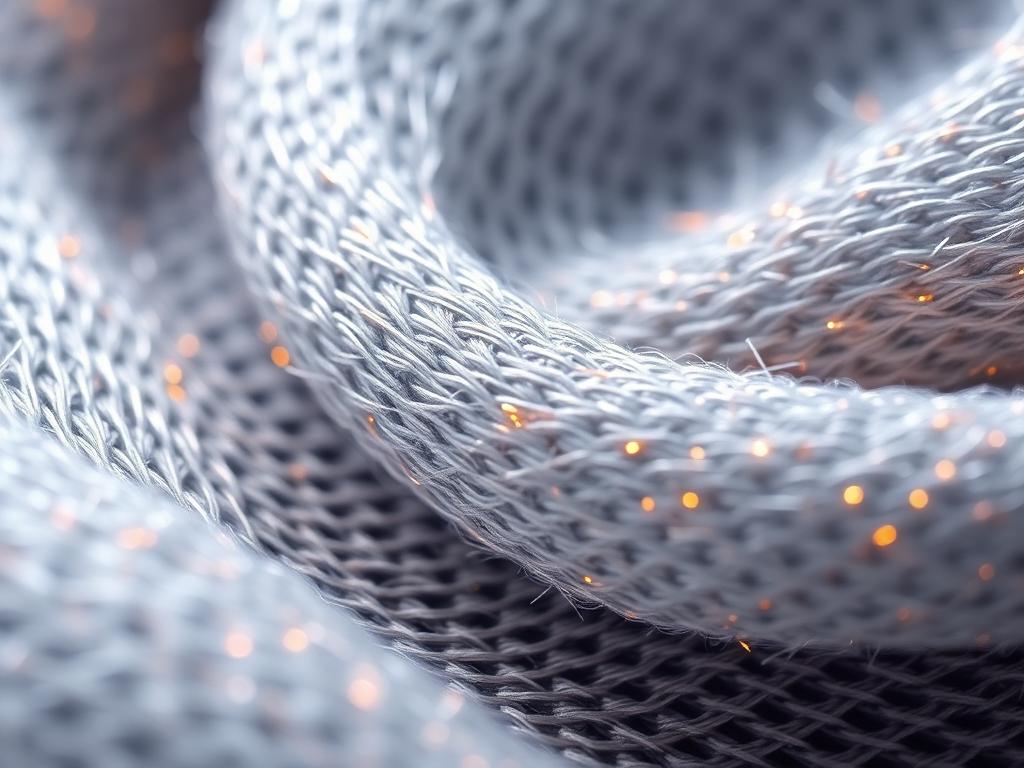
Woven quantum-dot LED fibers create flexible, full-color textile displays, while dot coatings give fabrics UV protection above 50 and antibacterial properties. Embedded dots also enable wearable biosensors that track signals such as heart rate or sweat chemistry.
Where UbiQD Leads
UbiQD focuses on the verticals where its cadmium-free quantum-dot technology creates the clearest performance and sustainability advantages.

Agriculture
UbiQD’s UbiGro® Inner and Cover films bring quantum-dot light optimization to commercial greenhouses.

Solar Energy
UbiQD supplies fluorescent quantum-dot films for First Solar’s solar panels, develops perovskite quantum cutting to raise silicon panel efficiency, and applies quantum-dot technology to transparent, electricity-generating solar windows.

Security & Authentication
UbiQD’s luminescent quantum-dot security inks provide unclonable anti-counterfeit markers (SICPA partnership).
Frequently Asked Questions About Quantum Dots
Quantum dots are used in a growing range of applications that depend on precise light manipulation. The most commercially established uses include display technology (QLED TVs), but quantum dots are increasingly deployed in agriculture, where they optimize greenhouse light spectra to increase crop yield; solar energy, where they improve spectral conversion efficiency in photovoltaic panels; and building-integrated solar windows. UbiQD focuses on agriculture, clean energy, and security applications using its cadmium-free quantum dot technology.
Traditional semiconductors have fixed electronic and optical properties determined by their bulk material composition. Quantum dots are nanoscale semiconductors whose properties change based on their physical size, a phenomenon called quantum confinement. This means a single material (like copper-indium sulfide) can be engineered to emit a wide range of wavelengths simply by controlling dot size during synthesis, giving quantum dots a tunability that bulk semiconductors cannot match.
Safety depends on composition. UbiQD’s quantum dots are cadmium-free and heavy-metal-free, made from copper, indium, zinc, and sulfur, common earth-abundant elements with established safety profiles. That gives UbiQD’s materials a safer profile for agricultural and consumer-facing use. UbiQD’s dots have been deployed in commercial greenhouse environments and are engineered to meet material safety standards for industrial and agricultural use.
Conventional solar panels are optimized for a specific portion of the light spectrum and leave much of the incoming solar energy unconverted. Quantum dots can be tuned to absorb wavelengths that silicon panels underperform on and re-emit them at wavelengths the solar cells can convert more efficiently. UbiQD’s quantum dot materials are integrated into solar panel manufacturing processes with minimal changes to existing infrastructure, improving energy output without requiring new panel architectures. UbiQD also applies quantum dot technology to transparent, electricity-generating solar windows.
Quantum dots and quantum computing are distinct technologies that share terminology but serve entirely different purposes. Quantum dots are physical nanomaterials that manipulate light through photoluminescence; they are used in displays, agriculture, solar, and other optical applications. Quantum computing uses quantum mechanical phenomena like superposition and entanglement to perform computations. Some research explores quantum dots as potential building blocks for quantum computers, but UbiQD’s work is focused entirely on light-based applications in agriculture, clean energy, and security.
UbiQD quantum dots are available through multiple channels depending on the application. Standard quantum dot materials are available from Strem Chemicals via strem.com/ubiqd. UbiGro greenhouse film products are available at ubiqd.shop. For non-standard formulations, custom volumes, or B2B partnership inquiries, contact UbiQD directly at sales@ubiqd.com or through the purchase page.
Ready to Work with Quantum Dots?
UbiQD works with researchers evaluating quantum dot materials, manufacturers exploring drop-in integration, and growers looking for ways to increase crop yield.
Explore our materials specifications and safety data on the Our Materials page, or go directly to Purchase to find the right channel for your needs. If your application is not standard, contact us; custom formulations and partnership inquiries are welcome.
